7 Signs Someone Is Using Your Land in India, Seen From Abroad
Seven quiet signs that someone has started using your land in India, what each looks like on the ground and from satellite, and what to do next from abroad.
By the PlotPehra Land DeskUpdated 6 min read



7 quiet warning signs
On this page
- 1. Is there a crop on your land that you didn't plant?
- 2. Has the soil been cleared or levelled?
- 3. Is there a new boundary fence or wall?
- 4. Has a shed, tube-well or structure appeared?
- 5. Is there a new path, track or gate?
- 6. Is someone digging soil or sand (illegal mining)?
- 7. Has your land record changed without you knowing?
- What does a change look like from above?
- What should I do when I spot a sign?
Someone using your land rarely announces it. The first signs are usually small: a crop you didn't plant, a patch of cleared soil, a new line of fence posts. Spot them early and most problems stay small.
Here are seven quiet signs to watch for, what each looks like on the ground and from satellite, and what to do next when you live thousands of kilometres away.
1. Is there a crop on your land that you didn't plant?
A crop you didn't plant or lease out is the most common first sign that someone is using your land. It often starts at the edge nearest a neighbour's field and spreads inward over a few seasons.
On the ground: a sown field where there should be fallow land or wild grass. Straight rows, irrigation channels, or the same crop as the next field.
From satellite: a green patch that rises and falls with the farming season. Satellite vegetation measures like NDVI make this easy to see: healthy crops show up strongly, bare land does not. The official crop inspection record, called girdawari in some states, may also list who is cultivating.
What to do: save the image with its date. Ask a trusted person who is farming it. If you haven't agreed to it, talk to a lawyer before the pattern repeats season after season.
2. Has the soil been cleared or levelled?
Freshly cleared or levelled soil often means someone is preparing the land for farming, storage or building. It is a change worth checking even if nothing is on it yet.
On the ground: trees or bushes removed, the land flattened, fresh tractor or JCB tracks, heaps of earth at the edges.
From satellite: a sudden change from green or mixed cover to bright, bare soil, often with sharp straight edges. Comparing the latest clear image with the last one, and with the same season in past years, makes it stand out.
What to do: note the date the change appeared. Clearing is often the step just before something bigger, so it is a good time to ask questions.
3. Is there a new boundary fence or wall?
A new fence or wall is one of the clearest signs that someone is claiming space. Boundaries matter because they show, to everyone in the village, who controls the land.
On the ground: new posts, barbed wire, a brick wall, or boundary stones that seem to have moved. Sometimes an old ridge between fields has been ploughed over.
From satellite: the fence or wall itself is usually too thin for free 10 m images. What can show is a cleared strip along it, or a different land use on each side. A site visit or drone video confirms it.
What to do: get the boundary checked against the official map. A formal demarcation by the revenue department can settle where the line should be. Don't pull down anything yourself; talk to a lawyer first.
4. Has a shed, tube-well or structure appeared?
Any new structure, even a small one, is a serious sign — though only the larger ones show from space. A shed, a room, a tube-well or a cattle enclosure suggests someone plans to stay.
On the ground: a tin shed, a brick room, a pump house, a water tank, or a thatched shelter. Sometimes electricity poles or a new connection appear too.
From satellite: a new bright or dark patch where there was none before. A house-sized building or a cleared, hard-surfaced yard shows in free 10 m images; a small tin shed or a tube-well usually doesn't. A lot of building happens in the monsoon, when nobody visits and clouds can hide the ground for weeks. Read more in can satellites see my land in the monsoon.
What to do: act quickly. Structures are much harder to remove once they are finished and in use. Save the evidence and contact a local property lawyer.
5. Is there a new path, track or gate?
A new path or gate shows people are regularly getting onto your land. It can also create a habit of access that is harder to stop later.
On the ground: a worn footpath, tractor tracks cutting across the plot, a gap cut in a hedge, or a new gate, sometimes with a lock you don't have the key to.
From satellite: a footpath or a gate is too small to see. A wide, heavily used track or a cleared approach road sometimes shows as a line of bare soil, often leading to a neighbour's land or a road.
What to do: ask your trusted person who is using the path and why. A new padlock on your land is a strong signal to speak to a lawyer.
6. Is someone digging soil or sand (illegal mining)?
Pits, trenches or missing earth can mean someone is digging soil, sand or gravel from your land and selling it. Illegal mining damages the land and can be hard to repair.
On the ground: deep pits, heaps of sand or soil, truck tracks, standing water in new holes, especially near rivers or brick kilns.
From satellite: dark or irregular patches of disturbed ground, pits that fill with water after rain, and a pattern that grows from one clear image to the next.
What to do: save dated images and report it through a lawyer or the local authorities. Mining can change the land quickly, so waiting has a real cost.
7. Has your land record changed without you knowing?
A paperwork change, like a mutation you didn't request, can be the most serious sign of all, even if nothing has changed on the ground. Mutation (intkal or dakhil-kharij) updates the revenue record; it is not proof of title by itself, but a wrong entry is a warning.
On the ground: nothing may look different. You might hear rumours of a sale, a loan, or someone "getting the papers done".
From satellite: satellites can't see paperwork. This sign is caught by watching your record of rights, such as the jamabandi, khatauni or 7/12 extract, on your state's portal. Our state guides list each one.
What to do: check your record online regularly, or have it watched for you (PlotPehra checks it weekly in 19 states). If you see a change you didn't make, get a certified copy and talk to a lawyer straight away. Our guide to mutation explains the process.
What does a change look like from above?
Here is a sample of how a before and after comparison can reveal changes on a plot. Slide to compare.
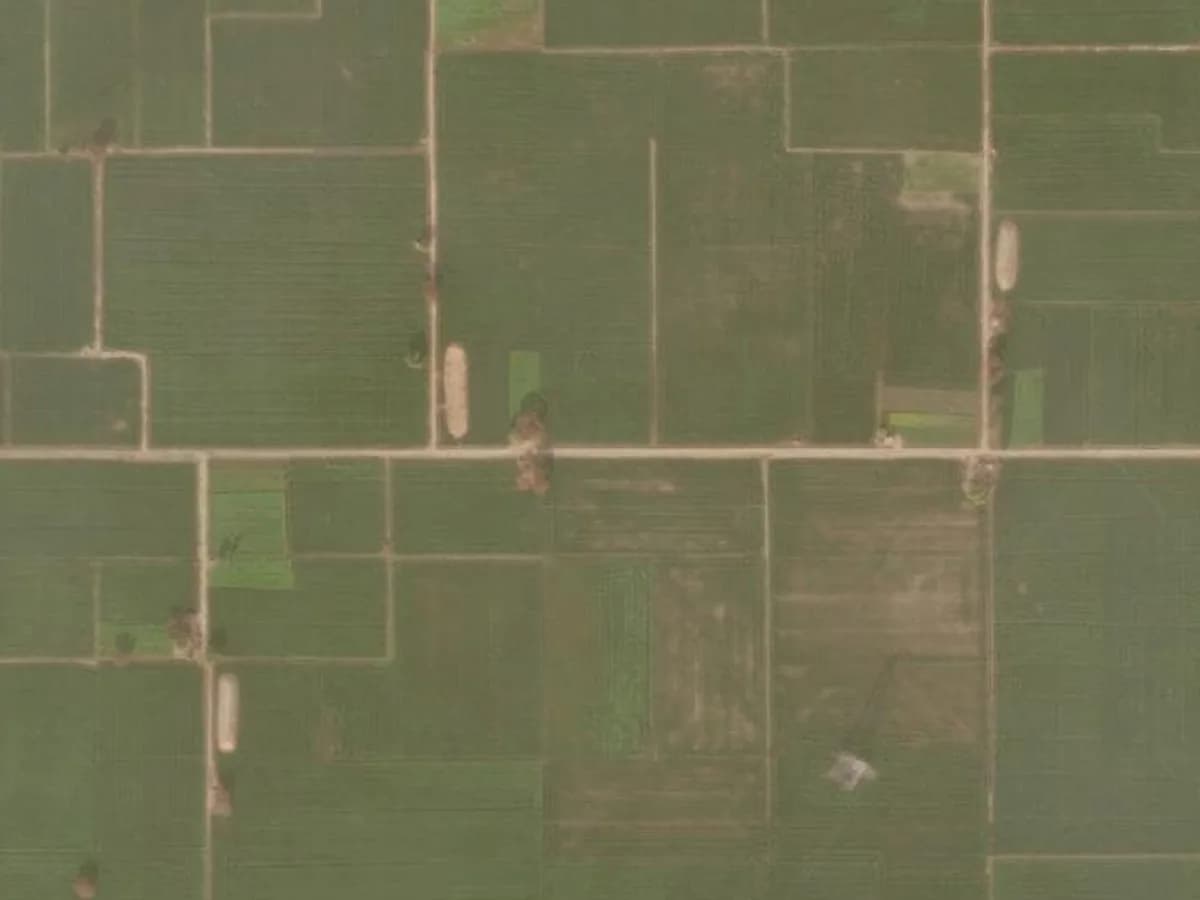 AugustSeptember
| Sign | Visible on satellite? | Best way to confirm |
|---|---|---|
| Crop you didn't plant | Yes, clearly, in growing season | Neighbour or caretaker check |
| Cleared or levelled soil | Yes | Site visit or drone video |
| New fence or wall | Rarely by itself; a cleared strip sometimes | Demarcation, site visit |
| Shed, tube-well, structure | Larger buildings yes; small sheds and tube-wells usually not | Site visit, lawyer |
| New path or gate | Wide tracks sometimes; footpaths and gates no | Trusted person on the ground |
| Soil or sand digging | Yes, once it covers a sizeable area | Site visit, local authorities |
| Mutation you didn't request | No | Land record check (weekly, if watched) |
What should I do when I spot a sign?
Stay calm, save evidence, and get help before you act. Most of these situations are far easier to handle early than late.
Save the evidence
Keep dated images, screenshots of your land record, and any messages. Don't delete anything.Ask someone you trust to look
A quiet visit by a neighbour or relative can confirm what is happening and who is involved.Check your records
Look up your record of rights online and note any changes.Talk to a local property lawyer
Get advice before confronting anyone. Our guide on what to do if your land is encroached walks through the next steps.
Timing matters because of the 12-year rule for adverse possession: the sooner you notice and respond, the stronger your position usually is. For the full picture, read our guide to protecting your land from abroad.
PlotPehra watches for these signs on both fronts: every clear satellite image of your plot for the physical ones, and, in 19 states, a weekly check of your land record for sign 7. A real person reviews every alert before it reaches you by email and WhatsApp.
Questions people ask
Look for a green crop pattern on your plot in a season when you have not leased it out. Satellite vegetation measures such as NDVI show crop growth clearly, and a trusted neighbour can confirm who is farming it.
Not usually on its own. Free satellite images have 10 m pixels, so a wall or wire fence is too thin to see. What does show is the change around it: a strip of cleared land, a different crop on one side, or a new building. A site visit or drone video confirms the detail.
Save the evidence with dates, ask a trusted person to check quietly, and check your record of rights online. Then talk to a local property lawyer before confronting anyone.
One sign is a reason to look closer, not to panic. Sometimes there is an innocent explanation, such as a relative helping out. What matters is finding out early and keeping a record.
About the PlotPehra Land Desk
Our team reviews satellite and land-record changes on NRI-owned land across India, and writes these guides from the questions families ask us. We’re not lawyers — for legal decisions, always speak to a local property lawyer. More about us · How we research our guides.